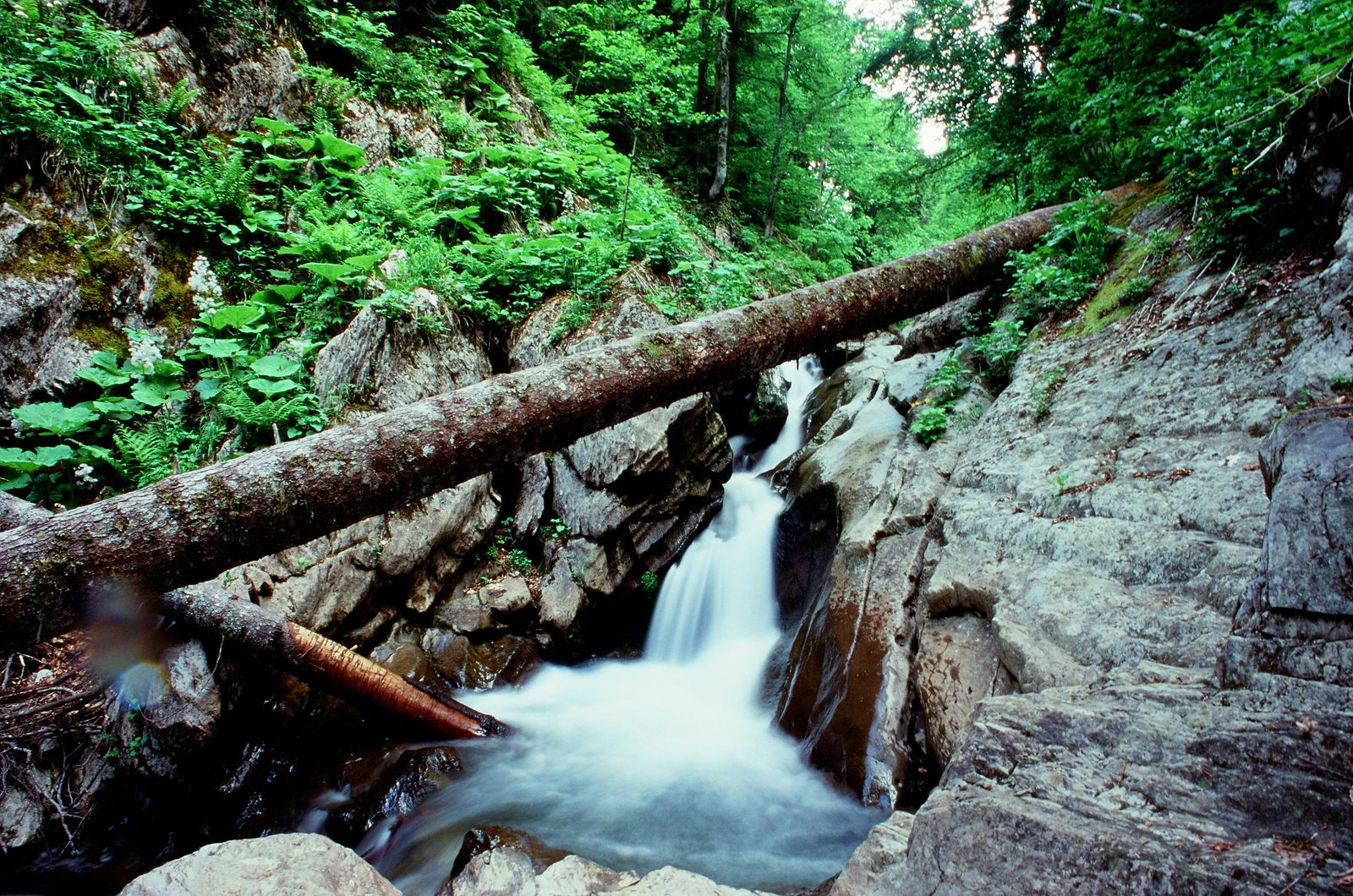
A state built for walking
Vermont’s 55 state parks pack outsized scenery into short, manageable trails — glacial lakes, cliff-top lookouts, old-growth forest and rare bog ecosystems, most reached by a walk of a mile or two. Many began as Civilian Conservation Corps projects in the 1930s, and their stone shelters and hand-built trails still shape the experience today.
This is a tour of the best for easy hiking and nature-watching, region by region — none demanding a hard climb, all rewarding a slow pace and a pair of binoculars.
Mount Philo & the Champlain Valley
Established in 1924, Mount Philo in Charlotte is Vermont’s oldest state park, and still one of its most beloved. A 1.6-mile trail (or a narrow summit auto road, CCC-built in the 1930s) climbs 968 feet to a ledge overlooking the entire patchwork Champlain Valley and the Adirondacks beyond. Every September and October it becomes one of New England’s premier hawk-migration watch sites, as thousands of broad-winged hawks and other raptors ride the ridge thermals south.
Emerald Lake & the marble country
In the Taconic valley of southwestern Vermont, Emerald Lake State Park in Dorset is named for the deep green of its 84-acre lake. An easy shoreline-and-ridge loop climbs into hemlock and sugar-maple woods with peek-a-boo lake views, and a nearby trail leads to the Freedley marble quarry, where hand-chiseled columns support a cavernous underground chamber — a reminder that Dorset held the first commercial marble quarry in North America.
Groton State Forest
Straddling the Caledonia–Orange line, 26,000-acre Groton State Forest holds seven parks and eight ponds. Kettle Pond’s 3-mile loop circles an undeveloped, loon-dotted shoreline through glacial boulder fields, while the Peacham Bog Nature Trail leads to a floating boardwalk over one of Vermont’s largest raised peat bogs — carnivorous pitcher plants, cotton grass and black spruce. A short climb to Owl’s Head reaches a CCC stone shelter and wide views over Lake Groton.
Kettle Pond — a 3-mile loon-dotted shoreline loop.
Peacham Bog — a floating boardwalk through rare peatland.
Owl’s Head — an easy climb to a CCC shelter and views.
Jamaica, Niquette Bay & more
Southern and northern gems round out a Vermont parks tour.
Jamaica (West River) — a flat rail-trail along the river to towering Hamilton Falls, with spring and fall whitewater releases.
Niquette Bay (Milton) — limestone cliff lookouts over Lake Champlain and quiet pebble beaches.
Mount Ascutney (Windsor) — a toll road and trails up a striking river-valley monadnock.
Elmore (Lamoille) — a beach and fire-tower hike on little Lake Elmore.
Planning a parks visit
Most Vermont state parks are open from late May (Memorial Day) through mid-October (Columbus Day), with a modest day-use fee — bring cash or check the reservation site. Trails can be muddy well into June, so save high or boggy walks for summer. Many parks offer tent and lean-to camping, but sites book out fast for summer weekends and foliage season, so reserve early.
Leave No Trace applies everywhere: pack out all trash, keep dogs leashed where required, and stay on boardwalks through fragile bogs. Sunrise and dusk are best for wildlife — loons, moose, beavers and, in fall, the raptor migration overhead.
Good to know
Common questions
What is Vermont’s oldest state park?
Mount Philo in Charlotte, established in 1924, known for its Champlain Valley views and fall hawk migration.
Which park has the best easy view?
Mount Philo for the valley panorama, and Owl’s Head in Groton State Forest for a short climb to wide views.
Are the parks good for families?
Very — most feature short, flat or gentle trails, beaches and campgrounds; Groton’s bog boardwalk and Mount Philo are favorites.
When are state parks open?
Generally late May through mid-October, with a small day-use fee; some trails stay muddy into June.
Can I camp in them?
Yes — many offer tent and lean-to sites, but summer weekends and foliage season book out early, so reserve ahead.
Every booking through Vermont Destinations funds one verified tonne of carbon removal — same room, same price, no markup.
Find a stay