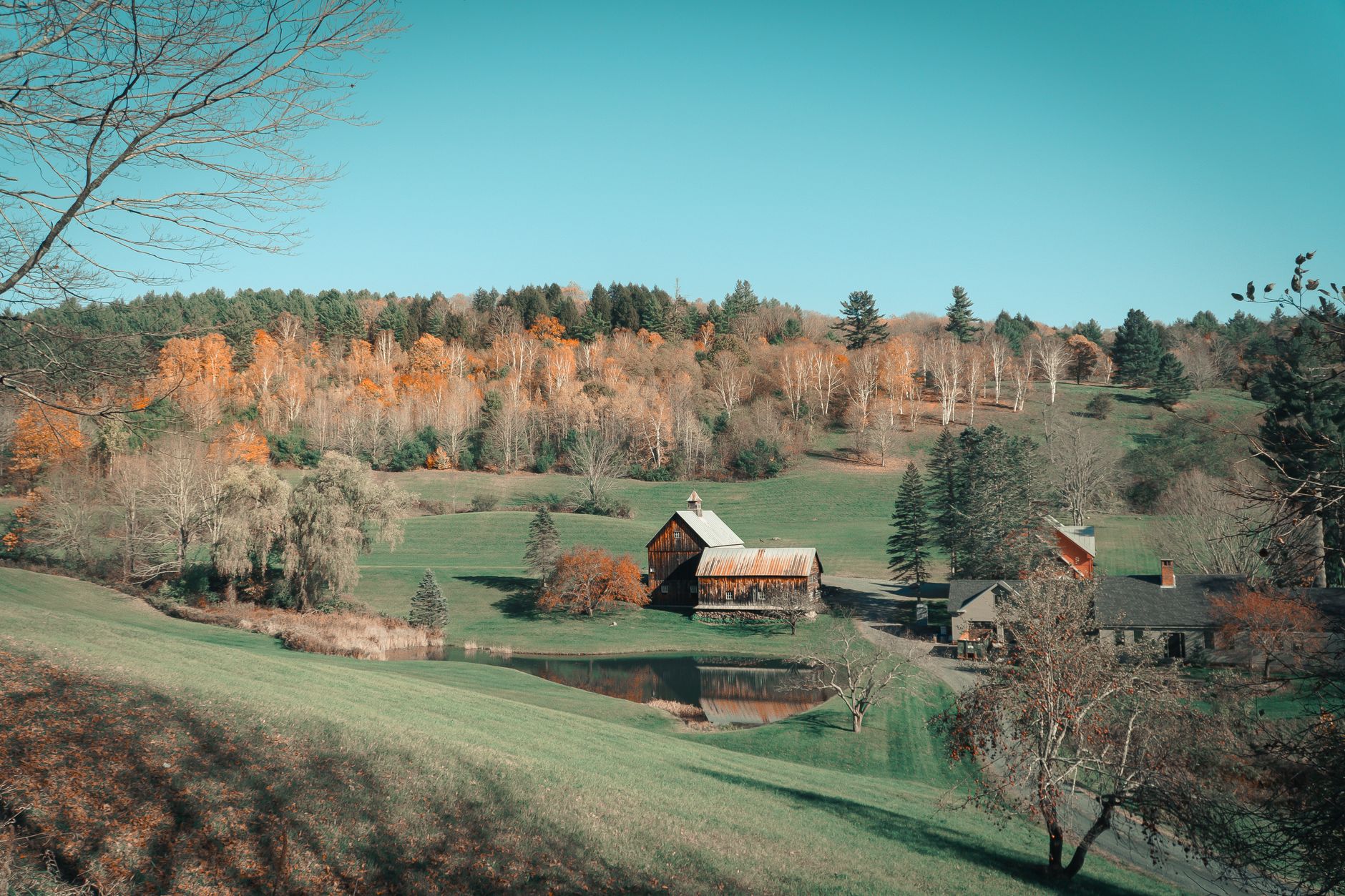
Vermont’s six true seasons
Standard calendars recognize four seasons; Vermonters navigate six distinct operational ones. Understanding the difference prevents travel mistakes like arriving in mud season when dirt roads wash out, or showing up after foliage in stick season.
Deep winter runs roughly January 1 to March 15: skiing, snowshoeing and fireside evenings. Maple and mud season is March 15 to May 1: sugarhouse boiling and dirt-road closures. Spring bloom is May 1 to June 15: wildflowers, fly-fishing and low-elevation hiking. Mountain summer is June 15 to September 1: lakes, farmers markets and swimming holes. Fall foliage is September 15 to October 20: peak leaf peeping and cider. Stick season is October 20 to December 15: pre-snow quiet, craft beer and cosy inns.
Deep winter, mid-January to mid-March
The premier season for downhill skiing, snowboarding, Nordic touring and fireside mountain hospitality. Average temperatures run 10 to 28 degrees Fahrenheit, with a base snowpack of 30 to 60-plus inches on the peaks. The key activity is alpine skiing at Stowe, Killington, Jay Peak and Mad River Glen.
Two travel notes. An all-wheel-drive or four-wheel-drive vehicle with winter tires is strongly recommended for mountain passes like Smugglers' Notch or Route 100. And hotel rates surge over Martin Luther King Jr. Day weekend and Presidents' Day week, so book three to six months in advance.
Maple and mud season, mid-March to April
As the snowpack thaws, the ground beneath softens, creating Vermont’s infamous mud season. Unpaved dirt roads become impassable to sedans, and many mountain trails are closed to prevent soil erosion — the Department of Forests, Parks and Recreation closes high-elevation trails above 2,500 feet through April. Stick to paved rec paths.
The silver lining is maple sugaring. Freezing nights and thawing days make the sap flow; visit local sugarhouses to watch it boil into syrup. The Vermont Maple Festival takes place in late April in St. Albans, and the food is unmatched: fresh warm syrup, sugar-on-snow with pickles, and the first maple creemees of the year.
Spring bloom, May to mid-June
Spring arrives quickly in May as leaf canopies open, blackflies taper off and rivers fill with snowmelt.
The best activities are fly-fishing for wild trout in the Battenkill and Lamoille rivers, road cycling through the Champlain Valley, and touring the gardens at historic estates like Shelburne Farms and Hildene. The travel advantage is real: low lodging rates and light crowds before school summer vacations begin.
Mountain summer, mid-June to early September
Summer brings warm days of 75 to 85 degrees and cool mountain nights of 55 to 60, without extreme humidity.
Water sports dominate — kayaking, paddleboarding and sailing on Lake Champlain — alongside the swimming holes at Warren Falls, Bingham Falls and the Dorset marble quarry. Food culture peaks with Saturday farmers markets in Montpelier, Burlington and Brattleboro.
Fall foliage, mid-September to October 20
The most famous season in New England. Over 75 percent of Vermont is hardwood forest, dominated by sugar maples that turn brilliant red, orange and gold.
The color moves in a predictable sequence. Mid-September brings early color to the high elevations of the Northeast Kingdom around Jay Peak and Island Pond and to peaks above 3,000 feet. September 28 to October 5 is peak for the northern and central mountains: Stowe, Waterbury, Smugglers' Notch, Route 100 and the Mad River Valley. October 5 to 15 shifts peak south to Woodstock, Manchester, Stratton and the lower valleys including Burlington and Lake Champlain. October 15 to 22 is past peak, with colors fading to rust and bronze as golden beech leaves drop.
Stick season, late October to mid-December
After the leaves drop and before full snowpack accumulates lies stick season, popularized in song by Vermont musician Noah Kahan.
The vibe is quiet, moody and deeply local. Summer tourists and foliage crowds have gone, leaving empty streets, crisp mountain air and crackling inn fireplaces. Best activities are brewery hopping along Pine Street in Burlington, browsing independent bookstores, indoor spa days and dining at farm-to-table taverns without a reservation. It also carries the lowest accommodation rates of the entire year.
Season by traveller
Which season suits which trip.
Deep winter, January to March — world-class skiing and full snow cover; cold temperatures and high room rates. For skiers and snowboarders.
Mud season, March to April — maple sugaring and cheap rates; muddy dirt roads and closed high trails. For budget road trippers and food purists.
Spring bloom, May to June — lush scenery and low crowds; variable rain. For cyclists, anglers and garden lovers.
Summer, June to September — lake sports, swimming holes and festivals; peak lodging demand. For families and road trippers.
Fall foliage, September to October — the world’s best leaf peeping; traffic congestion and premium rates. For leaf peepers and photographers.
Stick season, October to December — cosy fireside atmosphere and the lowest rates; bare trees and grey skies. For couples and craft beer lovers.
Good to know
Common questions
What is the best time to visit Vermont?
Late September to mid-October for foliage, mid-June to early September for lakes and swimming holes, and January to March for skiing. For value, May to mid-June and late October to mid-December have the lowest rates and lightest crowds.
When is peak foliage in Vermont?
Mid-September in the Northeast Kingdom and above 3,000 feet; September 28 to October 5 for the northern and central mountains including Stowe and Route 100; and October 5 to 15 for southern Vermont, Woodstock, Manchester and the Champlain Valley.
What is mud season in Vermont?
Roughly mid-March to the end of April, when the thawing snowpack softens the ground. Unpaved roads become impassable to sedans and the state closes hiking trails above 2,500 feet to prevent erosion. The upside is maple sugaring season.
What is stick season?
Late October to mid-December, after the leaves drop and before the snow settles. Bare trees and grey skies, but empty streets, crackling inn fires, no-reservation dining and the lowest lodging rates of the year.
Do I need a winter car in Vermont?
For December through April, yes — all-wheel or four-wheel drive with winter tires is strongly recommended for mountain passes such as Route 108 through Smugglers' Notch and the higher stretches of Route 100.
Every booking through Vermont Destinations funds one verified tonne of carbon removal — same room, same price, no markup.
Find a stay